At Aliances per la Terra we have always believed that our biodynamic viticulture produces top quality grapes and wines, which have a positive influence on our lives and our health. The recognition from international experts, verifying these benefits in the compost and the wines, boosts our life energy.
When we speak of sensitive crystallisation, we are referring to a method of analysis that is part of the biodynamic philosophy. The aim is to obtain information about various qualitative aspects of living matter. Above all, it gives us information about the vital force, the energy that this living matter can transmit.
The method of analysis is simple. It is based on how living substances (wine, sap, compost…) alter the arrangement of the crystals of certain copper salts in laboratory tests. The substance to be analysed, copper chloride and double-distilled water are placed in a Petri dish and left in a temperature and humidity-controlled environment for a few hours. When the water evaporates, we obtain the image of the rearrangement of the crystalline needles around a germinating centre. Normally, the preparation is left to stand for a few more hours, and a second image is taken.
It is precisely this interpretation that requires specialist training and skills. It is by no means easy to describe the resulting image. A meaningful description can only be made after years of observation and investigation of the correlations with different aspects of the material under analysis.
Every living substance forms a pattern that we can call characteristic. In the case of wine, this allows us to interpret the vinification profile, the suitability of the time of harvest, the ageing potential, the absence of pathologies, the balance between oxidation and reduction, or the resistance to climatic crises. These are just a few examples.
As above, crystallisations specifically evaluate the vital impulse, the force that animates the earth, plants and animals, and connects us with cosmic influences, to promote a natural balance in the ecosystem. In biodynamic viticulture and at Gramona in particular, we prepare and apply the preparations to the compost, soil and plants in order to boost this vital energy.
Biodynamic preparations at Aliances per la Terra
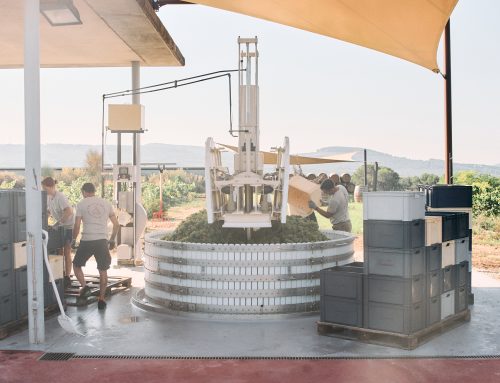
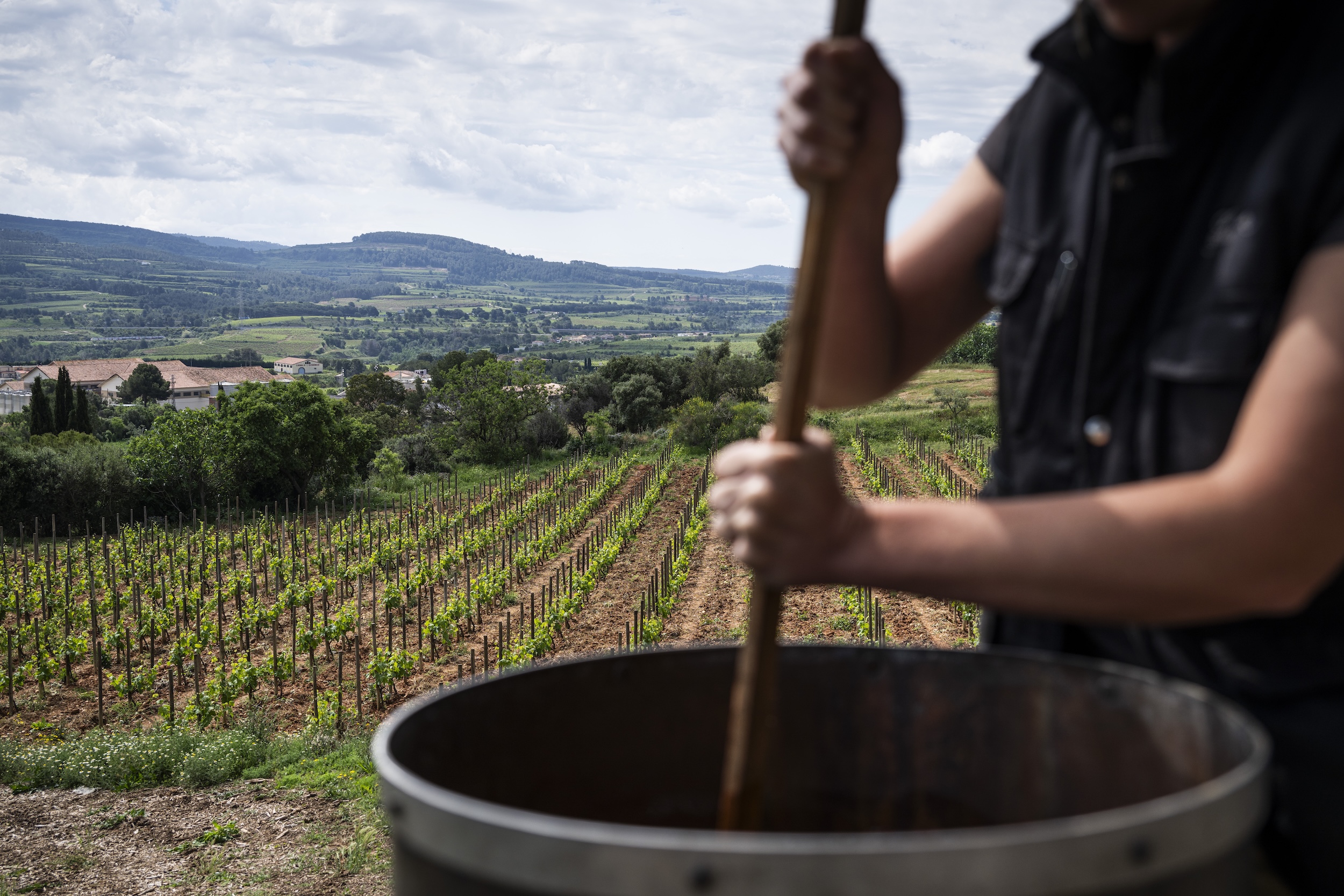
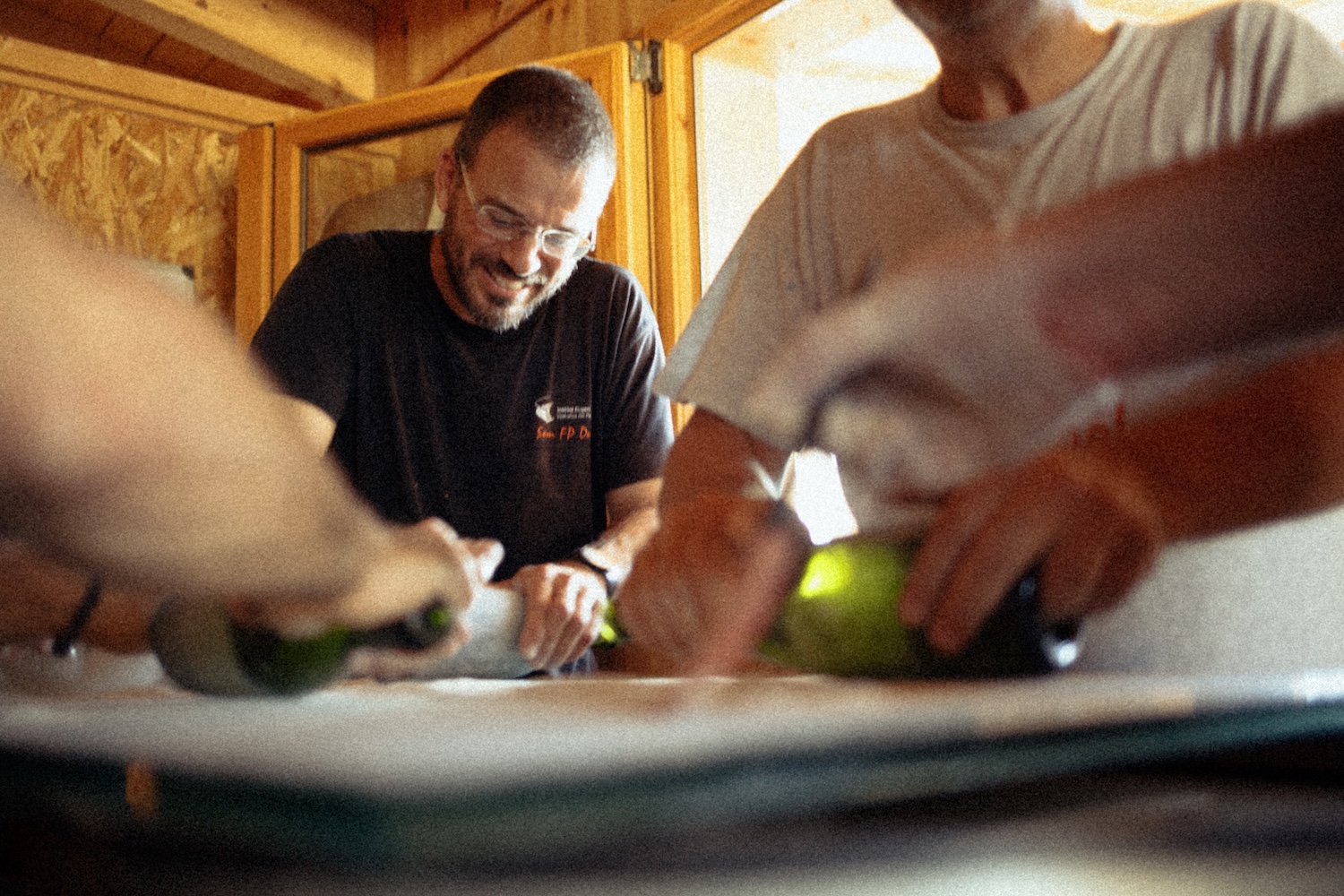
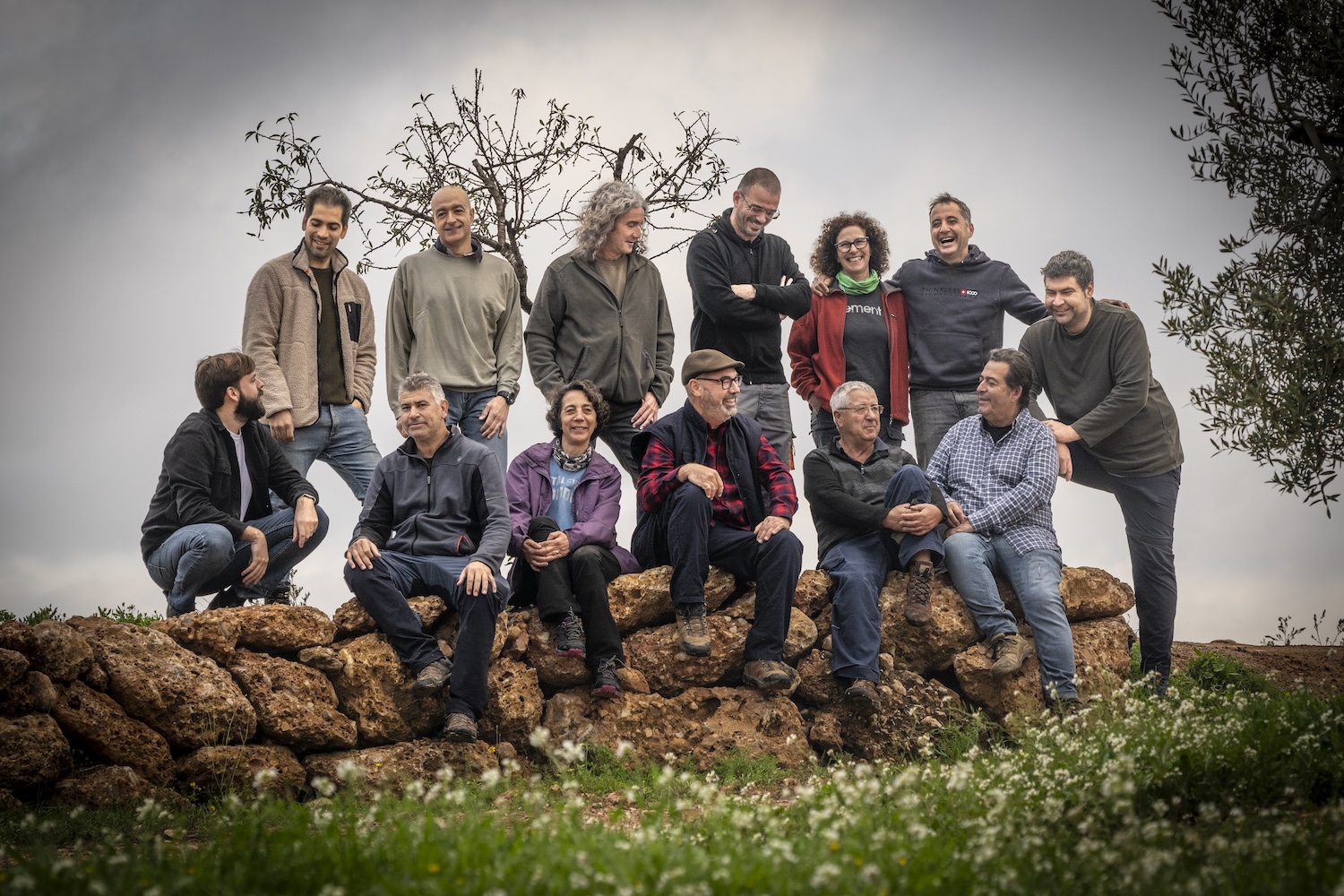
The members of the winegrowers’ collective Aliances per la Terra often gather to make biodynamic preparations together. These are moments of collaboration. We produce our preparations collectively because we believe that, this way, our energies are multiplied and we want our wines to transmit this value.
And we are not mistaken in this. The sensitive crystallisations report on the samples of preparations that were sent to the laboratory have been described as ‘a very good product, with a profound stability and the biodynamic signature very present’.
The sensitive crystallisation of Gramona Imperial 2024
We have been carrying out these analyses at Gramona for years with the aim of gathering as much information as possible about our wines. It is a means of understanding their condition, their current state, forecasting future developments and reviewing the tasks carried out. These are indicators of good practice for our learning process.
This year, we have sent the laboratory of Margarethe Chapelle samples of several wines from the 2024 vintage together with samples of compost made on our farm with the winegrowers of Aliances per la Terra. Chapelle, a specialist in sensitive crystallisations and an oenologist by training, has been working with this qualitative analysis technique for almost 30 years, specialising in the world of wine.
About the wine samples sent to her she wrote: ‘Gramona wines are evolving towards great refinement, the biodynamic markers are clear’.
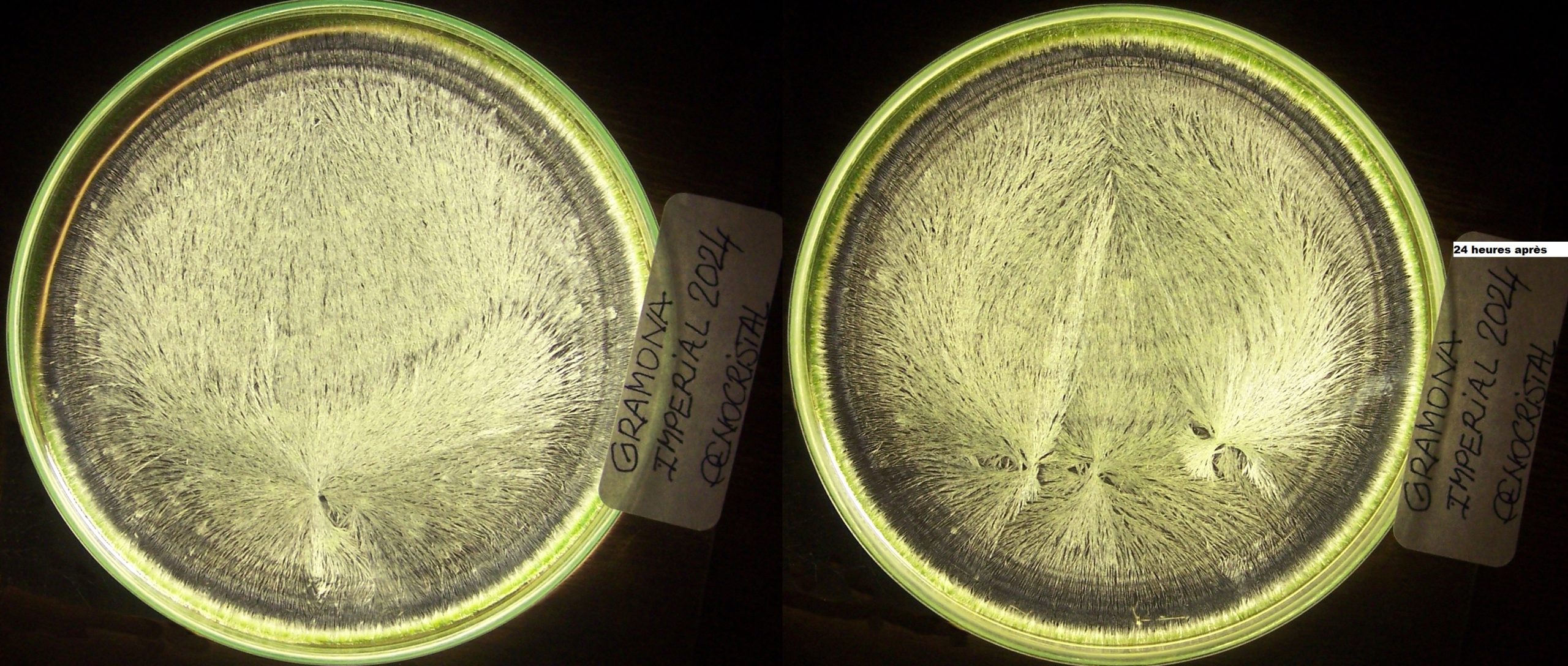
The image depicts the sensitive crystallisation of Gramona Imperial 2024. VComments sent by Chapelle’s laboratory, Oenocristal, speak of a ‘wine with good vital potential, with available reserves that have not yet been exhausted’.
The wine’s structure shows that ‘the harvest date was correct’ and ‘the degree of maturity was high enough to achieve the desired aromatic profile’ in terms of fruit and floral aromas. Information on the vinification process also says ‘the absence of rings in the central and outer fields indicates fermentation kinetics without strain and with a very good adaptation to the needs of the fruit’.
After 24 hours, the report highlights that ‘on tasting it will be perceived as more luscious and silky, with very good body’, ‘the tulip-shaped vortex characteristic of biodynamic viticulture wine is clearly visible’. Continuing on to the type of viticulture undertaken it explains: ‘the beautiful texture does not become coarse or alter after exposure to oxygen; its finesse and complexity is a characteristic of the wines of this house’.
We are particularly excited to see that, year after year, together with Aliances per la Terra, we succeed in ensuring our wines demonstrate the impulse of life that drives us to work to build the future of our land, our region and our people.