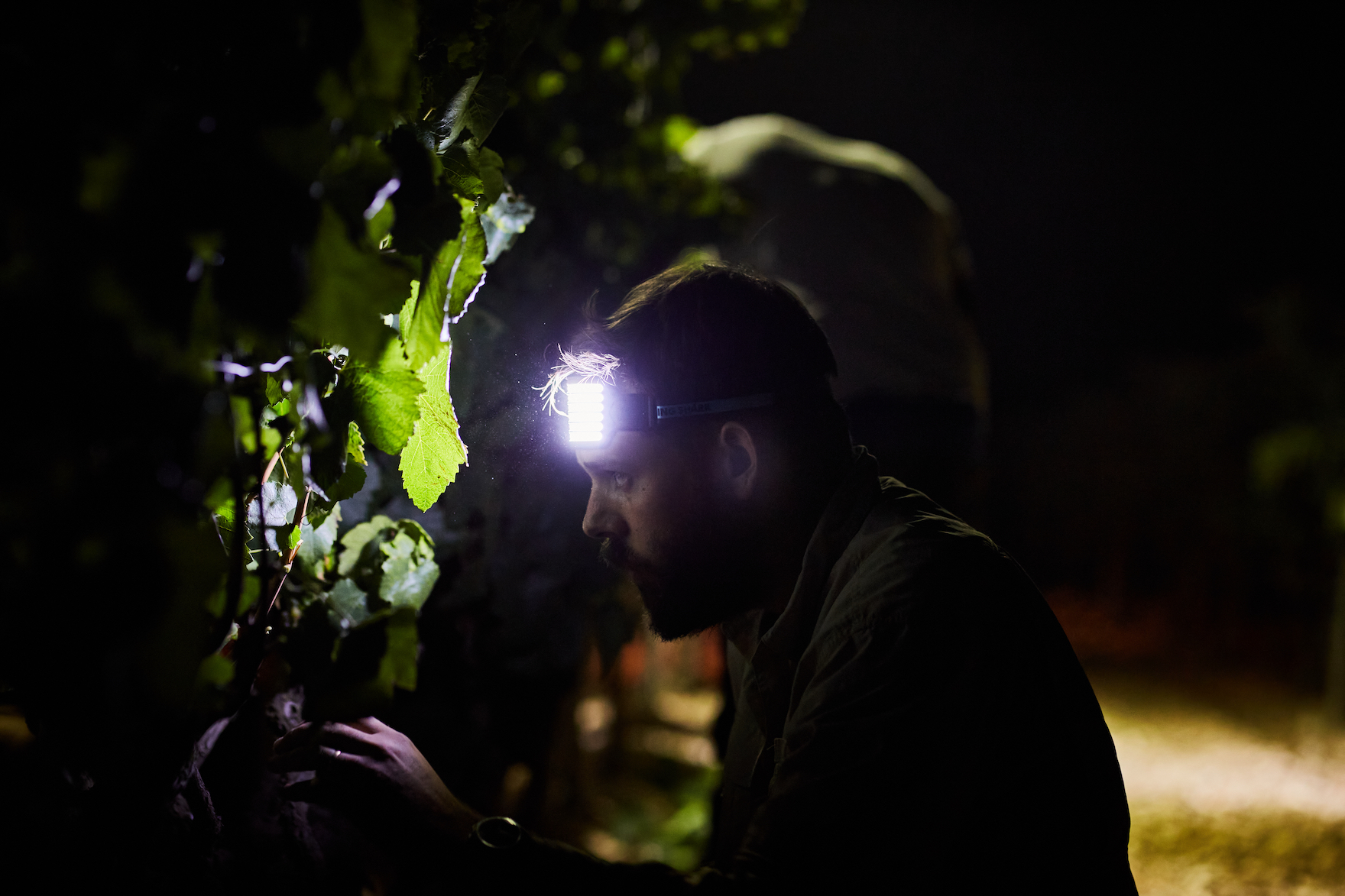
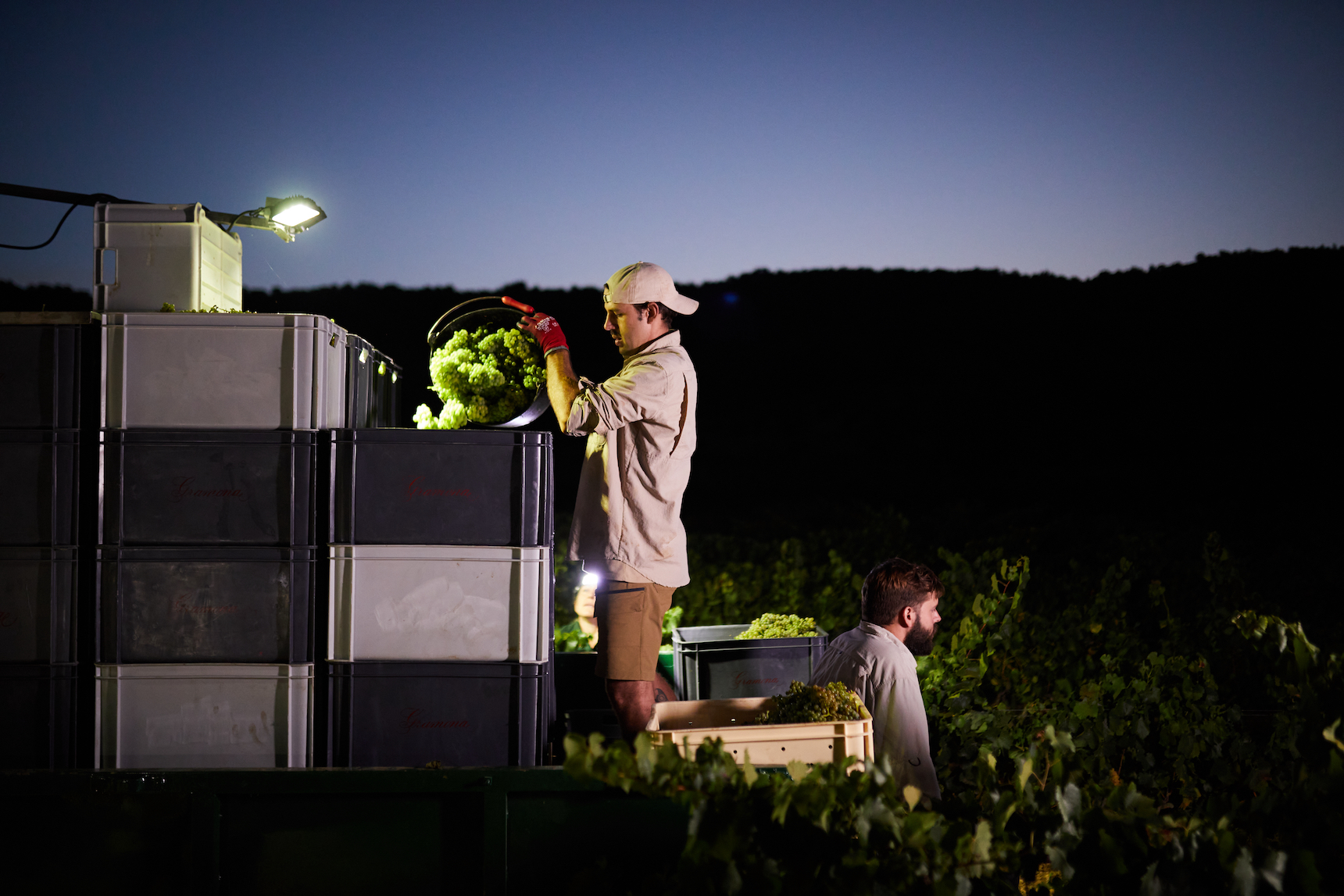
At the start of each harvest, we first welcome the grape pickers and assign them their work in the vineyard plots where the grapes are ready to be harvested. On the first day, we provide them with their equipment; from the following day on, each person is responsible for bringing this kit with them. Everyone receives two T-shirts, a pair of gloves, a pair of scisors, a bucket and a headlamp.
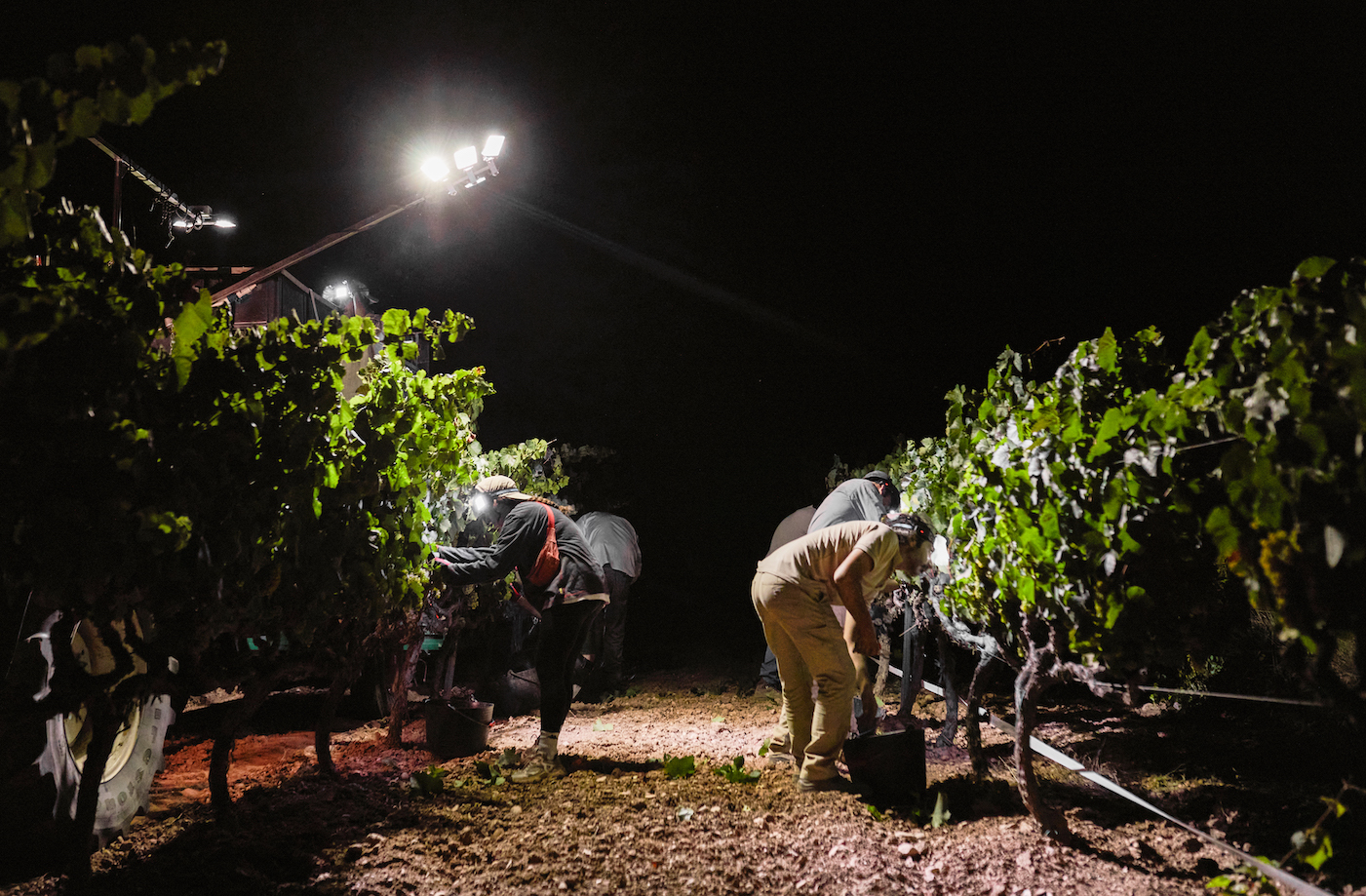
The headlamp is a new addition and seems to be here to stay. We used to start harvesting at first light, just before sunrise, but this is the first time we are picking at night. We get up in the middle of the night, arriving in the vineyard at 3 a.m. and working until noon at the latest. This way, both the grape pickers and the grapes avoid the extreme heat.
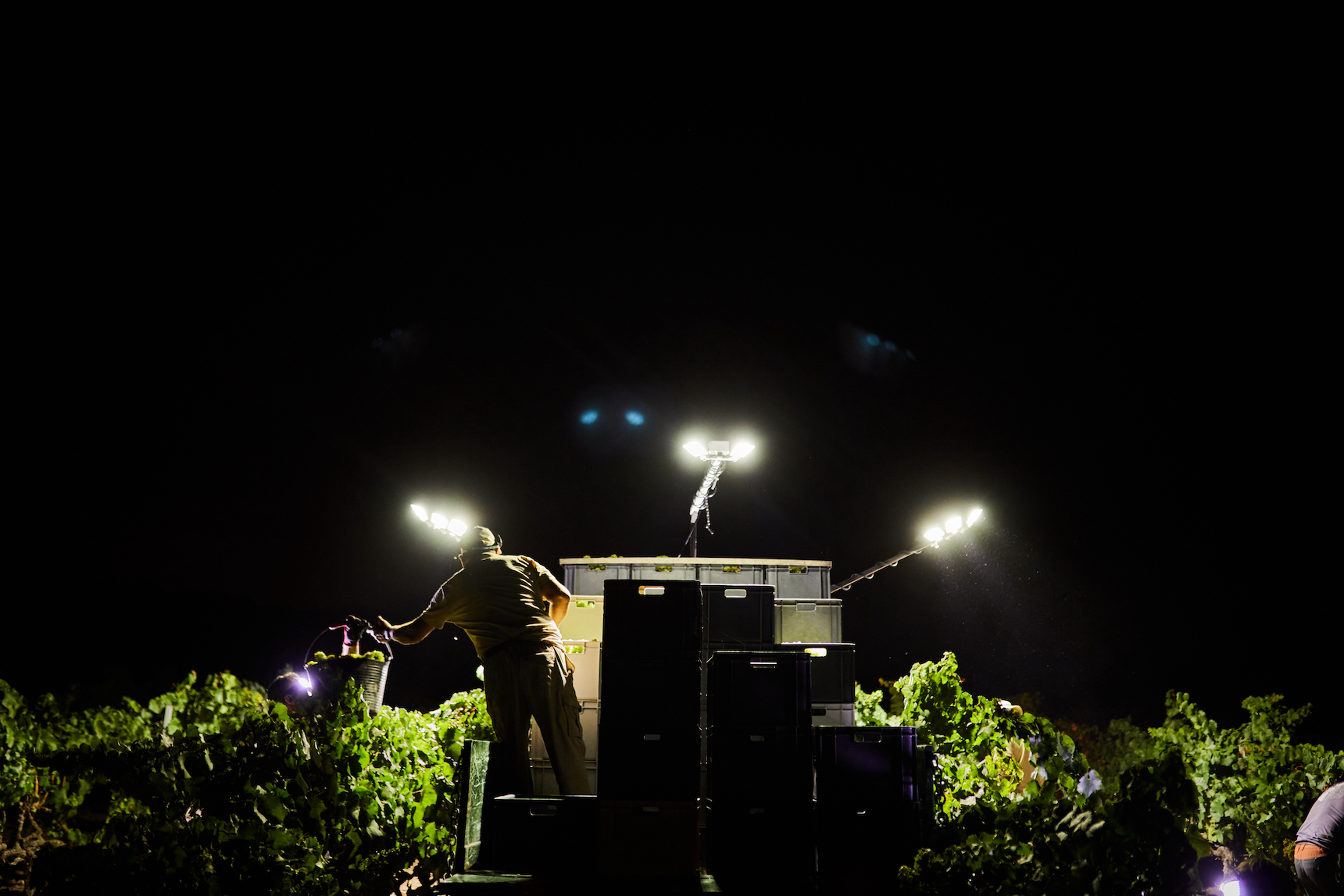
The personal lighting equipment emits 350 lumens; by comparison, 200 lumens are recommended for nighttime mountain racing. For additional lighting, structures have been built for each trailer, with a light strip on the crate to assist the loader and two adjustable lamps that shine over both sides of the rows to help the grape pickers in their work. This investment will be repaid by the intense freshness and aromas that this vintage’s wines will add to those that define our sparkling wines.
Adapting to climate change
We will start harvesting in the middle of the night and after about three hours the sun will start to come up. When the temperatures start to get too high, we will stop the day’s work. Perhaps one year we will be lucky and the spring rains will prevent extreme drought. Maybe the rainfall will be abundant and the first heat waves will be pushed back. In any case, we will use the daily weather forecast to plan the work schedules to ensure the well-being of the vineyard workers and the quality of the grapes.
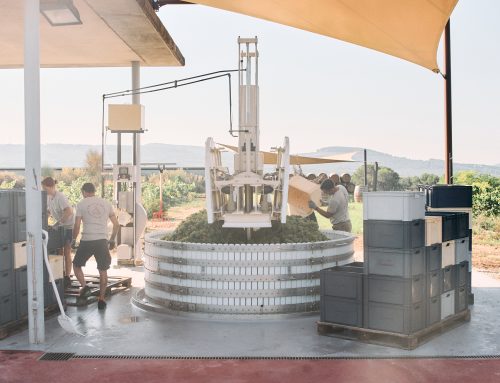
The coldest moment of the day is just after sunrise. It is estimated that the average minimum temperature in July is around 20 °C and this is when the grapes will start arriving in the winery. To preserve the aromas as much as possible, we cool the fruit to about 12 °C upon arrival. We expect that this will help us to achieve significant energy savings for the simple reason that reducing the temperature by 8°C costs less than reducing it by 30°C and that we will very likely be able to carry out a direct pressing, a luxury for the must of our future sparkling wines.
The delicacy of white grapes
After sunset, the temperature begins to drop. In the 7 or 8 hours between sundown and the start of harvesting, the fruit has time to lose the heat accumulated over the day. White grapes generally have thinner skins than red grapes and are more likely to burst when handled warmed, as they expand with heat and become more fragile.
Harvesting at night, when the temperatures are lower, helps to ensure that the various grape varieties arrive in the winery with their berries intact, without any oxidation, loss of must or an unwanted start of fermentation. This new way of working preserves the fresh white fruit, citrus and floral aromas in the base wines used for our sparkling wines and these remain prominent despite the long ageing process.
Learning and resilience
Recent years of extreme drought have taught us that if we want to continue producing quality sparkling wine, we need to start building resilience in the vineyards and changing the way we work to adapt to climate change. Today we carry out respectful pruning, we use keyline planting, we are experimenting with different types of mulch on the vineyard soil, and now, we are harvesting at night. All of these practices are designed to sustain the land and our livelihoods, as we did in past generations.
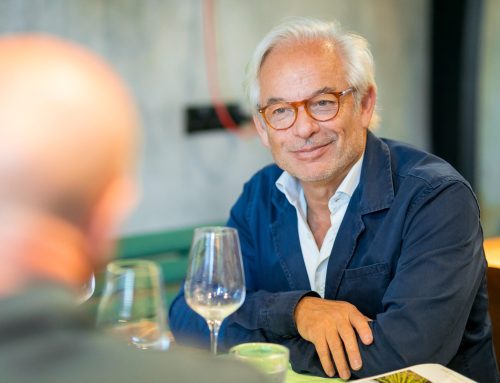
As long as the extreme summer temperatures continue, we are sure that many of our neighbours and colleagues will follow our lead and start harvesting at night – colleagues such as David Altés, one of our partners in Aliances per la Terra, who joins us every day just before dawn to complete the excellent work carried out over the year.
It’s hard work, but we love it. And this year, in the silence of the night, we enjoyed it under the stars.